| Light | Full sun (tolerates light shade) |
|---|---|
| Water | Regular first 3–6 months, then rainfall is usually enough |
| Soil | Sandy, rocky, or any well-draining soil; salt-tolerant |
| Wind & salt | Handles direct salt spray and coastal wind — a beach native |
| Size | 3–10 ft rounded shrub; excellent hedge |
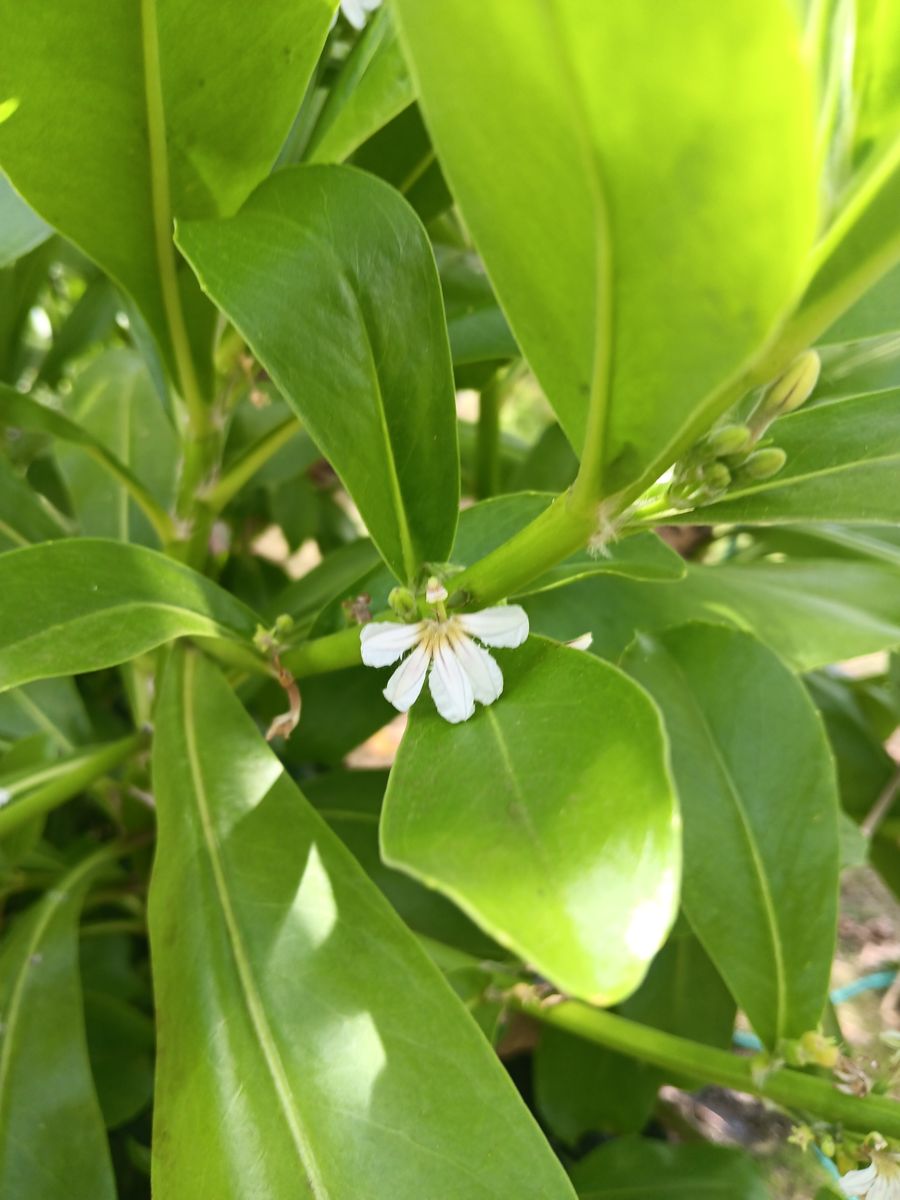
| Flowers | White 'half flowers' plus white berries, year-round |
| Native status | Indigenous to Hawaiʻi — true native landscaping |
| Best spot in Hawaii | Coastal yards, hot dry slopes, anywhere windward of the salt line |
📄 Take this guide with you
Get the free printable Naupaka Care Card — a one-page cheat sheet for the fridge, the greenhouse, or the plant shelf. Pop in your email and it's yours.
Mahalo! Here's your card: Download the Naupaka Care Card (PDF) →
We'll also send the occasional nursery update — what's blooming, what's ready for pickup. No spam, unsubscribe anytime.
How do you grow naupaka in a home yard?
Treat naupaka like the beach plant it is: full sun, sharp drainage, and no pampering. Plant it in sandy or rocky soil (it's fine in average yard soil as long as water doesn't pool), water deeply once or twice a week for the first few months, then taper off — established naupaka on the leeward coast live mostly on rain. It naturally grows into a dense, rounded mound with glossy, succulent bright-green leaves. For a hedge, plant 3–4 feet apart and let the mounds knit together. It takes shearing well but looks best lightly shaped rather than boxed.
Why is the naupaka flower only half a flower?
Naupaka's small white blossoms look like flowers torn in half — five petals fanned on one side, none on the other. Hawaiian moʻolelo explains it as two separated lovers: one banished to the mountains, one to the sea. Mountain naupaka (Scaevola gaudichaudiana and relatives) blooms with the 'missing' half up mauka, and beach naupaka blooms with its half makai, and the flowers will only be whole when the lovers reunite. It's one of the most told plant legends in Hawaiʻi, and it makes naupaka a meaningful gift plant.
Is naupaka good for coastal erosion and hedges?
Beach naupaka is one of Hawaii's best functional shrubs. Its dense root system helps stabilize dunes and sandy soil, its thick foliage breaks wind and catches blowing salt before it hits tenderer plants behind it, and its rounded habit makes a natural privacy hedge that needs almost no water once established. That's why you see it planted along coastal roads and resorts island-wide. For a home landscape, a naupaka windbreak on the ocean side creates a protected microclimate where you can grow fussier plants.
How do you propagate naupaka?
Naupaka grows from both cuttings and seed. Softwood tip cuttings 4–6 inches long, stuck in moist sand or perlite in bright shade, root within several weeks — keep them barely moist, not wet. The white berries also sprout readily: in the wild they float on ocean currents to colonize new beaches, which tells you how tough the seed is. Nick or soak berries, sow in sandy mix, and be patient. Cuttings give you a bigger plant faster and are how we produce ours.
What problems does naupaka have?
Very few — naupaka's problems are almost always too much care. Overwatering or heavy clay soil causes root rot and yellowing; rich fertilizer creates soft, floppy growth that pests enjoy. In sheltered, humid spots you may occasionally see mealybugs or scale, treatable with insecticidal soap. Otherwise, the main 'problem' is size: a happy naupaka wants to be an 8-foot mound, so give it room or commit to occasional pruning. Note that in Florida and the Caribbean this species is considered invasive — in Hawaiʻi it's right at home, where it belongs.
Naupaka FAQ
Is naupaka a native Hawaiian plant?
Yes — beach naupaka (Scaevola taccada) is indigenous to Hawaiʻi, found naturally on coastlines across the islands and the Pacific. Planting it is true native landscaping.
Can you eat naupaka berries?
The white berries aren't considered good eating and are best left for the birds. Traditionally, naupaka flowers and leaves had practical uses — including rubbing the leaves on goggles or masks to prevent fogging, a trick divers still use.
How fast does naupaka grow?
Moderately fast in full sun — a 1-gallon plant can become a 4–5 foot mound in 2–3 years in good conditions, faster with occasional deep watering.
Does naupaka need fertilizer?
Rarely. In most Hawaii soils it needs none. At most, a light application of slow-release fertilizer at planting helps it establish. Heavy feeding produces weak, pest-prone growth.
🧰 Our favorite naupaka tools & supplies
What we actually reach for at the nursery:
- Hedge shears — a light shape-up twice a year keeps a naupaka hedge tidy
- Coarse cinder or sand — amend heavy soil so roots never sit wet
- Soaker hose — efficient deep watering during the establishment months
- Insecticidal soap — the occasional mealybug patrol in sheltered spots
- Mulch (coarse, not deep) — keeps roots cool on hot dry slopes while establishing
Heads up: some links on this page may become affiliate links, which means we may earn a small commission (at no extra cost to you) if you buy through them. We only recommend things we actually use in our own backyard.
Sources & further reading: University of Hawaiʻi CTAHR native plant landscaping publications and Hawaiʻi native plant references. Everything else comes from our own hands-on growing in Wai'anae, O'ahu.