| Light | Full sun — 6+ hours for heavy blooming |
|---|---|
| Water | Deep and infrequent; let soil dry between waterings |
| Soil | Fast-draining — cactus mix or sandy soil with perlite |
| Feeding | High-phosphorus fertilizer (like 10-30-10) in the growing season |
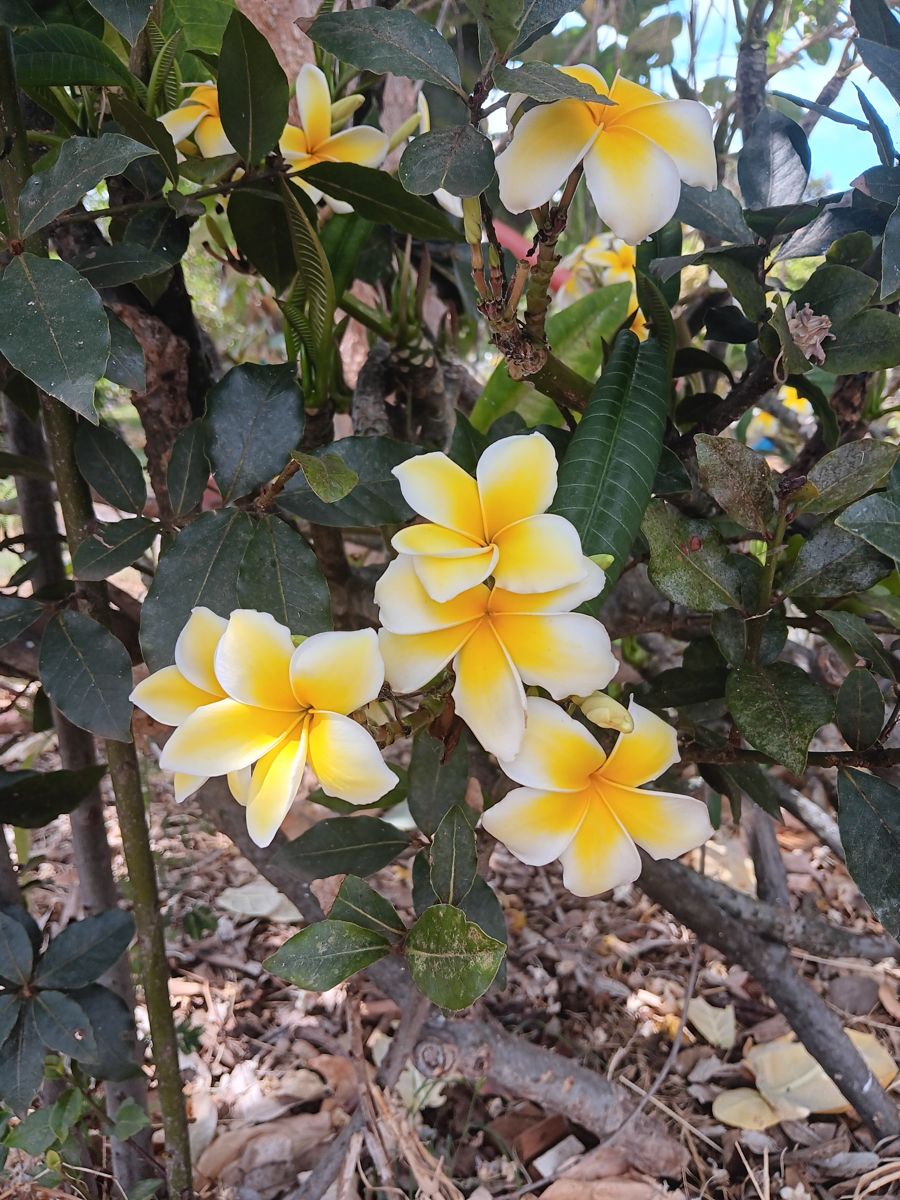
| Blooms | Spring through fall; fragrant lei flowers |
| Size | Small tree, prunable; happy in large pots |
| Pets | Milky sap is irritating — keep pets from chewing |
| Best spot in Hawaii | The sunniest, best-drained corner of the yard |
📄 Take this guide with you
Get the free printable Plumeria Care Card — a one-page cheat sheet for the fridge, the greenhouse, or the plant shelf. Pop in your email and it's yours.
Mahalo! Here's your card: Download the Plumeria Care Card (PDF) →
We'll also send the occasional nursery update — what's blooming, what's ready for pickup. No spam, unsubscribe anytime.
How much sun does a plumeria need?
Plumeria bloom in proportion to the sun they get. Six hours of direct sun a day is the minimum for good flowering; eight or more is better. A plumeria in part shade will survive and leaf out but gives you long, lanky branches and few flowers. Plant them in the brightest spot you have — against a light-colored wall is even better, since the reflected heat mimics their native dry tropics. On O'ahu's leeward side they take full, all-day sun without complaint once established.
How often should I water plumeria?
Water plumeria deeply, then leave them alone until the soil is dry again — roughly once a week in hot weather for potted plants, and often not at all for established trees in the ground during Hawaii's rainy season. Plumeria store water in their thick, succulent branches and are far more likely to be killed by overwatering than drought. Soggy soil leads to stem and root rot, the number one plumeria killer. In winter, when many varieties drop their leaves and go dormant, cut watering back to almost nothing.
What fertilizer makes plumeria bloom?
Use a fertilizer higher in phosphorus (the middle number) during the growing season — something like 10-30-10, applied monthly from spring through early fall. Phosphorus drives flower production; high-nitrogen lawn fertilizers give you lush leaves and no blooms. The University of Hawaiʻi's CTAHR extension recommends regular light feeding over occasional heavy doses. Stop fertilizing as the days shorten so the plant can slow down naturally into winter dormancy.
How do you grow plumeria from a cutting?
Plumeria cuttings root best when you let them rest first. Take a 12–18 inch cutting from a healthy branch tip, strip off most leaves, and let the cut end dry and callus in a shaded, dry spot for one to two weeks. Then plant it 3–4 inches deep in barely moist, fast-draining mix (cactus mix with extra perlite is perfect), stake it so it can't wobble, and water sparingly — just enough to keep the mix from bone-dry — until new leaves show, usually in four to eight weeks. Watering an unrooted cutting like a normal plant rots it. This is how we start every plumeria we sell.
Why does my plumeria have orange spots under the leaves?
Orange-yellow powdery pustules on the undersides of leaves are plumeria rust, a fungal disease that thrives in Hawaii's warm, wet months. It looks alarming but rarely kills a tree — heavily rusted leaves yellow and drop early, and the tree pushes clean new growth. Manage it by raking up and trashing fallen leaves (don't compost them), improving airflow with light pruning, and avoiding wetting the foliage when you water. For prized trees, fungicides labeled for rust help if started early in the season. Watch also for spider mites and whiteflies on stressed plants.
Do plumeria lose their leaves in winter?
Most common plumeria varieties (Plumeria rubra types) are deciduous: as days shorten, they yellow and drop every leaf and stand as bare, knuckly branches through winter. This is dormancy, not death — don't panic and don't water heavily trying to fix it. The evergreen Singapore plumeria (Plumeria obtusa) holds its glossy leaves year-round in Hawaii. Either way, blooms return with the warm spring weather, and the flowers — the classic lei flower — keep coming into fall.
Plumeria FAQ
How long does a plumeria cutting take to root?
Usually 4–8 weeks in warm weather. New leaves emerging is the sign roots have formed. Callus the cutting for 1–2 weeks before planting and keep the mix only barely moist while rooting.
Why isn't my plumeria blooming?
The usual causes, in order: not enough direct sun (needs 6+ hours), high-nitrogen fertilizer (switch to a bloom formula like 10-30-10), the plant is too young (cuttings typically bloom in 1–3 years), or heavy pruning that removed the branch tips where flowers form.
Is plumeria sap poisonous?
The milky sap is irritating to skin, eyes, and stomachs — wear gloves when pruning and keep pets and kids from chewing branches. It's a nuisance-level toxin, not a deadly one, but wash it off promptly.
Can plumeria grow in pots?
Yes, plumeria do very well in large pots with fast-draining mix — that's how most collectors grow them. Pot culture also keeps the tree a manageable size. Repot every 2–3 years and stake top-heavy plants.
🧰 Our favorite plumeria tools & supplies
What we actually reach for at the nursery:
- Cactus/succulent potting mix + extra perlite — the fast drainage plumeria roots demand
- Bloom-booster fertilizer (10-30-10 or similar) — the middle number is what makes flowers
- Clean, sharp loppers or pruning saw — smooth cuts callus faster when taking cuttings
- Garden gloves — plumeria sap is sticky and irritating
- 5–7 gallon nursery pots — roomy homes for rooted cuttings' first years
Heads up: some links on this page may become affiliate links, which means we may earn a small commission (at no extra cost to you) if you buy through them. We only recommend things we actually use in our own backyard.
Sources & further reading: the University of Hawaiʻi CTAHR plumeria extension publication (OF-24). Everything else comes from our own hands-on growing in Wai'anae, O'ahu.